Evening Primrose
Evening Primrose (Oenothera biennis)
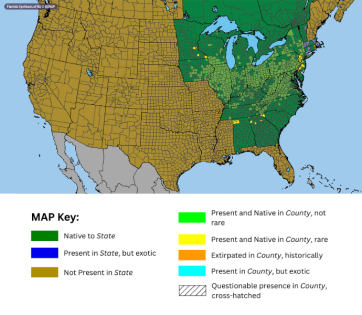
Range: Oenothera biennis, the common evening-primrose, is a native biennial herb in the Onagraceae family with a broad native range across eastern and central North America. It thrives in open, disturbed habitats such as fields, prairies, thickets and roadsides.
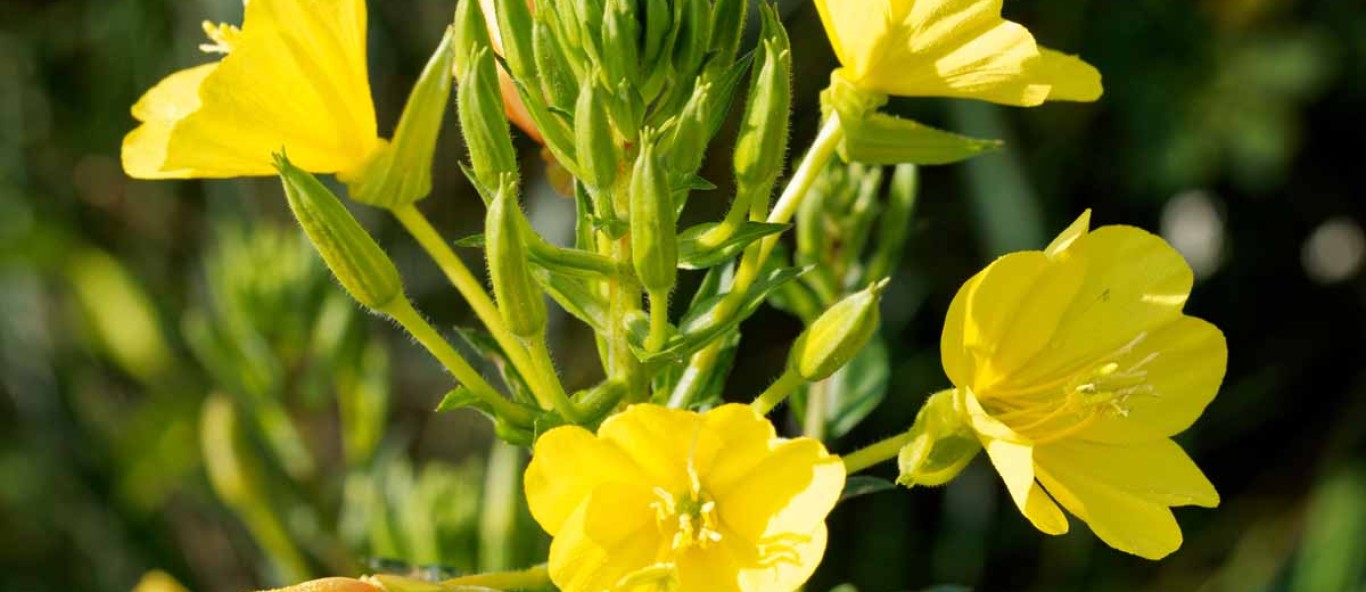
Description & Impact: Evening primrose typically completes its life cycle in two years, forming a basal rosette of leaves in the first year and flowering in the second year. It grows 1–6.5 feet tall with stems that are erect, stiff, and sometimes purple-tinged. The stems are semi-woody in the second year, sparsely branched, and covered with short appressed hairs and longer spreading hairs. The first-year basal rosette leaves are lanceolate, 8–30 cm long, 2–6 cm wide. Second year leaves are spirally arranged on the flowering stem, narrowly oblanceolate to elliptic, 5–22 cm long and 1.5–5 cm wide. The flowers bloom in early summer to early fall, opening at dusk and closing in the morning. Blooms are bowl-shaped, lemon-yellow petals, 1.2–2.5 cm long, that fade slightly with age. This plant is adapted for evening bloom opening and is primarily pollinated by nocturnal insects such as hawkmoths, increasing the biodiversity in their habitat.
Plant Medical History: Indigenous tribes used various parts of the plant to relieve illnesses. The roots were boiled and eaten like potatoes, and pounded roots were applied as a hot poultice for piles and boils or chewed and rubbed on muscles to improve strength. Leaves were cooked as greens or eaten raw and used to ease gastrointestinal problems, sore throats, and menstrual pain. Tea was made from the plant to aid digestion and stimulate appetite. Juice from the plant was applied to treat skin inflammation and minor wounds.
Cultivation & Garden Use: Evening primrose grows in USDA zones 4-9 and prefers full sun to light shade and well-drained, sandy or loamy soils. It becomes drought-tolerant once established. It primarily spreads through self-seeding rather than vegetative means like rhizomes. After flowering in its second year, the plant produces small capsules that split open to release numerous tiny seeds. In gardens, it often spreads by reseeding, covering disturbed ground with a low rosette in the first year and flowering in the second. This plant tolerates a range of conditions making it suitable for wildflower gardens, prairies, and naturalized areas. It will increase pollinator diversity in a habitat due to its adaptation for blooming in the evening.