Compass Plant
Compass Plant (Silphium laciniatum)
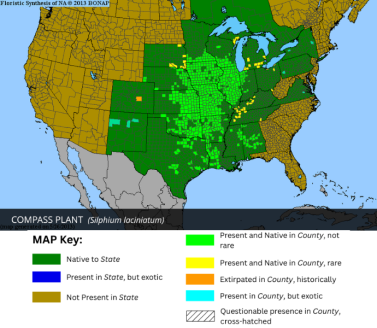
Range: Silphium laciniatum is native to central North America, with its range spanning from eastern South Dakota and eastern Texas in the east, through the Great Plains and tallgrass prairie regions, to Wisconsin, Michigan, and Alabama in the south. It is a hallmark species of the tallgrass prairie ecosystem.
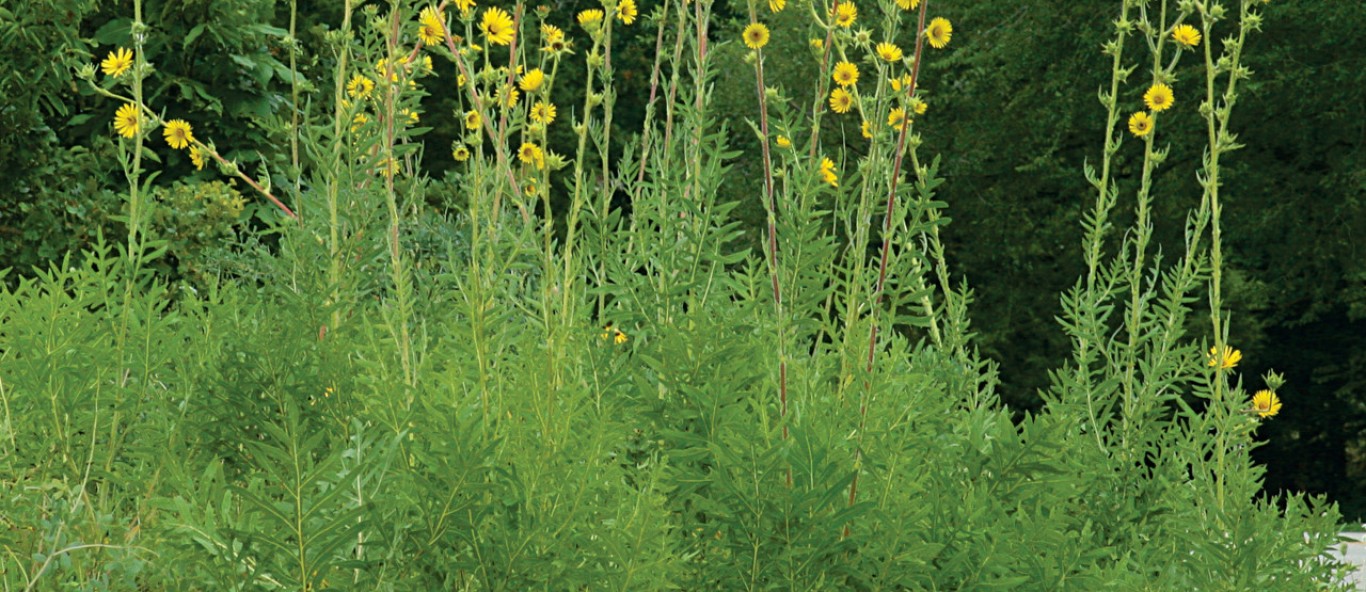
Description & Impact: Compass plant is a tall, coarse-textured herbaceous perennial that can grow 3 to 12 feet. It emerges from a large reddish-brown taproot that can extend 12–16 feet deep into the soil. The plant has deeply cut, pinnately lobed basal leaves that are 12–24 inches long. The leaves resemble a giant oak leaf, with rough, sandpaper-like surfaces covered in stiff hairs. These leaves orient themselves north–south with their faces east–west to reduce midday sun exposure, giving the plant its common name. From late June through August, the plant produces large, sunflower-like yellow flower heads, each 2–4 inches across, in clusters on the upper two-thirds of the stem. Each head contains 15–34 yellow ray florets and numerous yellow disk florets in the center. The flowers are visited by long-tongued bees such as bumblebees and leaf-cutting bees, as well as some butterflies.
Plant Medical History: Traditional Indigenous uses include pounding the root used to make a tea for general weakness or fatigue, preparing it as a tonic to rid horses of worms, and chewing the resinous sap as a chewing gum to cleanse teeth and sweeten breath. In the 19th century, preparations were used as a fever reducer, diuretic, to induce vomiting, expectorant, tonic, to stop bleeding, antispasmodic, and stimulant, as well as for sweat-inducing purposes.
Cultivation & Garden Use: Compass plant thrives in USDA zones 3-7 and requires full sun. It grows well in deep, loamy, well-draining; moist but not waterlogged. Though it prefers moist conditions, it can be drought-tolerant once established. Because the taproot reached over a foot into the ground, this plant takes several years to mature and flower. This plant's blooms may flop especially if grown on uneven ground; consider staking the stalks if necessary. This long-lived species may live over 100 years in ideal conditions. The drought-tolerant prairie giant can add bold structure and nectar-rich blooms to native gardens.