Cup Plant
Cup Plant (Silphium perfoliatum)
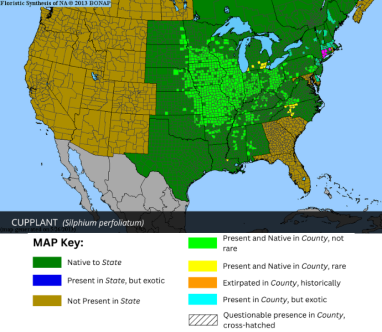
Range: Silphium perfoliatum is native to central and eastern North America, primarily thriving in the northern Great Plains, Great Lakes region, and along the Mississippi River valley to the Gulf Coast states. It can commonly be found in prairies, meadows, stream edges, fens, lake borders, and woodland edges.
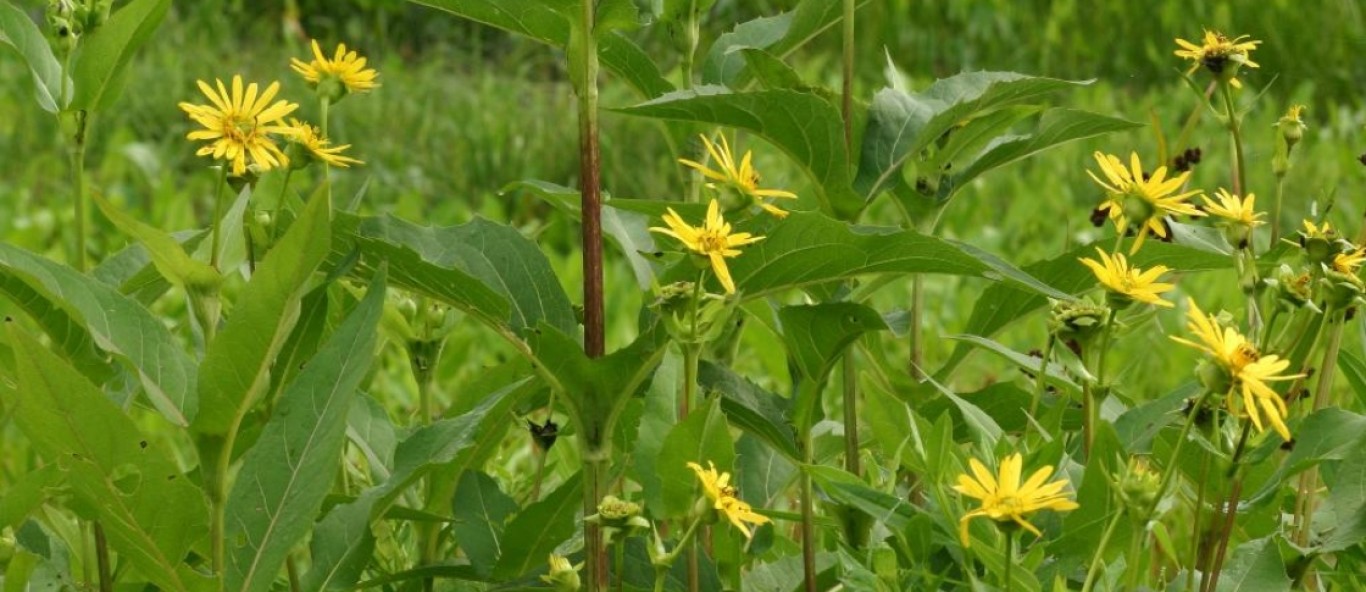
Description & Impact: The cup plant typically grows 3–8 feet tall with a thick, square, hairless stem that remains unbranched except for a flowering panicle at the top. The most distinctive feature is its pairs of large, opposite leaves that are between 4–12 inches long which wrap around the stem at each node, forming natural cups that can hold rainwater. These leaves are broadly lanceolate to cordate, coarsely toothed, and have a rough, sandpapery texture. It produces sunflower-like composite flower heads that are 2–4 inches across from midsummer to early fall. The flowers are visited by long-tongued bees, butterflies, and skippers, which are the main pollinators. The leaf cups provide drinking water for birds, insects and tree frogs, and the seeds are a favorite of goldfinches and other birds.
Plant Medical History: Various parts of the plant were employed to treat different ailments. The root was used to make poultices for treating burns, wounds, and skin conditions, while leaf extracts were applied to sore or inflamed eyes. Some tribes used the plant as a component in smoking mixtures and ceremonial preparations.
Cultivation & Garden Use: The cup plant can survive in USDA zones 3a - 9b. It grows best in full sun but can tolerate partial shade. The plant prefers well-drained, moist soil but tolerates loam, clay, and sandy soils as well. The plant spreads via a deep taproot and abundant shallow rhizomes, forming dense colonies. It can also self-seed easily and spreads aggressively, making it both a valuable prairie restoration plant and a potential weed in gardens. Once established, it is difficult to transplant the main plant due to the deep taproot, though young offshoots can be moved. It is valued in native plant gardens, pollinator habitats, and for erosion control due to its deep roots.