Prairie Smoke
Prairie Smoke (Geum triflorum)
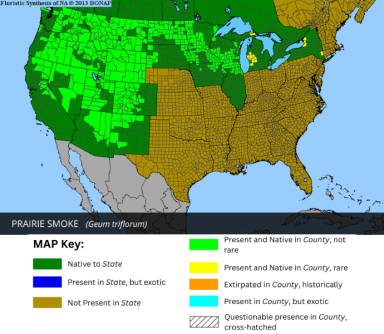
Range: Geum triflorum is a native North American herbaceous perennial in the rose family (Rosaceae) with a broad continental range. It thrives in moist sandy, gravelly loam, meadows, stream sides, and roadsides, often in ponderosa pine, Douglas fir, and spruce–fir forests.
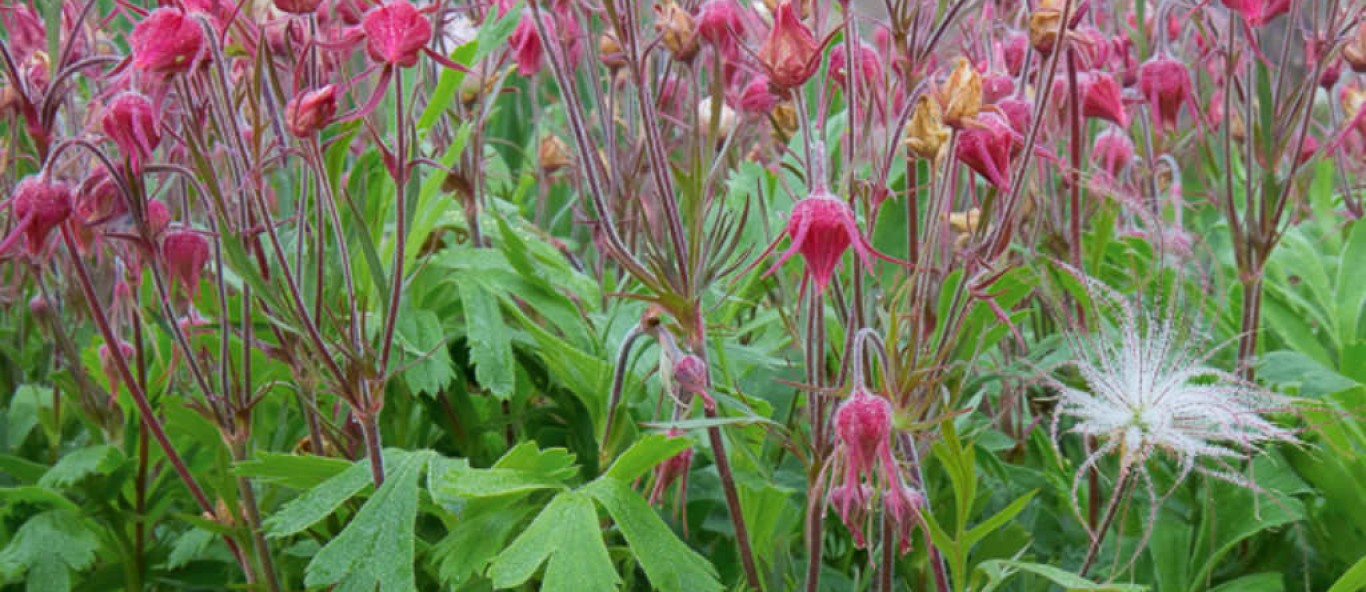
Description & Impact: Prairie smoke is a perennial herb that can grow 6–18 inches tall, 6–12 inches wide with short, spreading rhizomes, which form colonies of stemless rosettes. The leaves grow from the roots and can be 1.5–12 inches long. They are divided into leaflets with deep divisions that makes the leaves resemble the leaves of a fern. The leaves are covered with extremely small downy hairs. The flowers appear from mid-spring to early summer. The flowering stalks stand well above the leaves on red-purple-maroon stems, between 4 –18 inches in height. Each flower hangs upside down by itself from a separate pedicle. There are usually three flowers on each flower stalk, but sometimes one, five, or even seven per stalk. They are most often a light yellow to cream, but sometimes have a blush of pink or purple, all with purple veins. When pollination is completed, the flower heads turn upright, and the sepals begin to open. The many styles grow longer and densely covered in fine hairs making them resemble downy bird feathers or wisps of mauve "smoke." These flowers are most frequently visited by bumblebees and other bees that have the "buzz pollination" ability, where they can vibrate their wings to dislodge pollen from tight spaces.
Plant Medical History: A brew of the roots was used in Native American sweat houses as a body wash for aches and pains. A strong decoction of the roots was also used as a tonic in treating severe coughs and fevers and doubled as an eye wash or mouth wash for sore throats. An infusion of the roots mixed with oil can be applied as a salve to sores, rashes, blisters, and flesh wounds.
Cultivation & Garden Use: Prairie smoke grows in USDA zones 3-7, and enjoys life in full sun. It is commonly found in sandy and gravely soils. It also can grow in loamy and clay soils, as long as there is good drainage. Mature prairie smoke plants like moist conditions during spring growth, but they prefer drier conditions once summer arrives. Prairie smoke often self-seeds and spreads underground, so you can propagate by dividing the plant every few years. It is relatively pest-resistant and shows little to no issue from diseases. It is planted in gardens as an ornamental for its interesting seed heads and for the persistent green foliage during mild winters. It is a popular pick for native gardens, rock gardens, and pollinator gardens to attract species of bumblebees.