Sweet Fern
Sweet Fern (Comptonia peregrina)
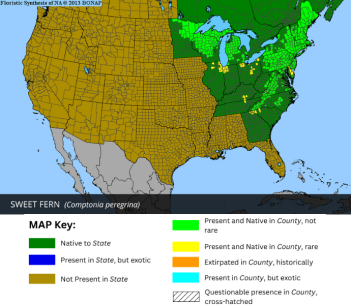
Range: Comptonia peregrina is a native deciduous shrub of eastern North America, belonging to the Myricaceae (bayberry) family. It is present in the Great Lakes region and extends into parts of the northeastern United States.
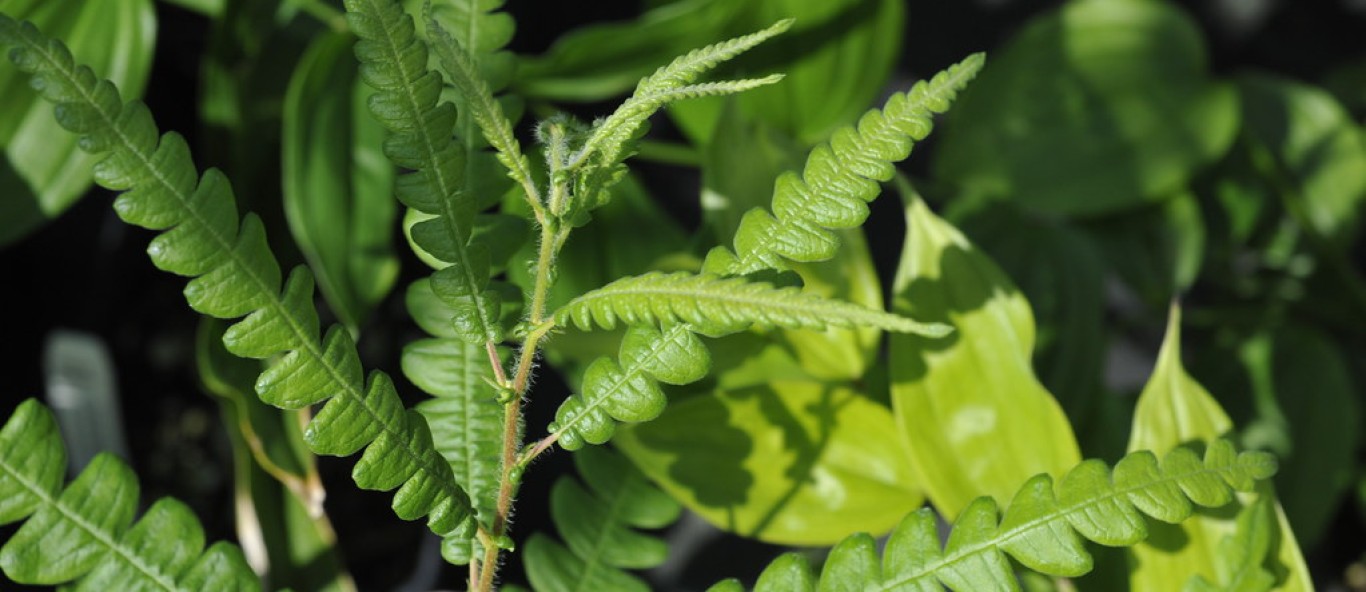
Description & Impact: This plant typically grows 2–5 ft tall, often forming low, spreading colonies up to 3–8 ft wide through rhizomes. The leaves are narrow, linear to lanceolate, 3–6 in long, with deeply lobed, pinnatifid margins resembling fern fronds. The leaf lobes are rounded or oblique, with prominent sinuses. The upper surface is dark green; lower is paler with veining. The plant's flowers depend on the sex; either male catkins emerge in spring or small, red/pink, burr-like structures that develop into nut-like fruits for the female flowers. This is the host plant for several moth species, including the Io moth and case-bearer moths.
Plant Medical History: Native North American tribes employed sweet fern primarily for its leaves, which are astringent, blood‑purifying, expectorant, and tonic. It was used as a poultice for wounds, burns, insect bites, sprains, toothaches, and rheumatism, taking advantage of its anti‑inflammatory and antiseptic qualities. The plant was also applied externally to counteract the effects of poison ivy and to soothe stings or minor hemorrhages.
Cultivation & Garden Use: Sweet fern grows well in USDA zones 2–7, is drought-tolerant, and thrives in acidic, sandy soils. This plant prefers full sun and will be drought tolerant after its first year of growing. It is resistant to frost and cold weather and may spread via seeds and/or rhizomes. This plant is a natural nitrogen fixer, which can benefit other plantings nearby, freeing up locked nitrogen in the surrounding soil. It provides habitat and food for wildlife, with the small, nut-like fruits persisting into winter. Sweet fern is suitable for native plant gardens, mixed borders, woodland edges, and slope stabilization. It is low-maintenance, deer-resistant, and can be used as a ground cover or foundation planting.