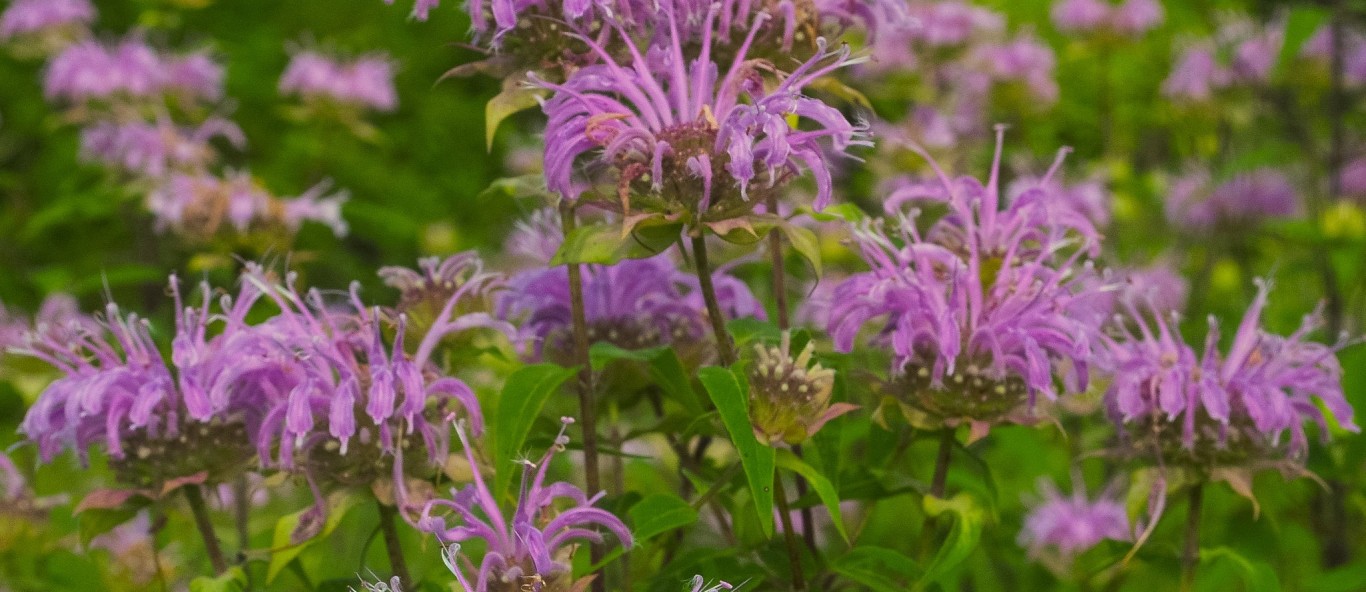
Wild Bergamot
Wild Bergamot (Monarda fistulosa)
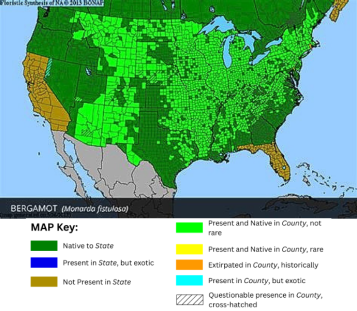
Range: Monarda fistulosa is native to most of North America, ranging from southern Canada to northern Mexico and from the Atlantic Coast to the Rocky Mountains. Wild bergamot thrives in a wide range of habitats and soil types, demonstrating remarkable ecological plasticity. It grows in dry prairies, open meadows, woodland clearings, and unplanted fields.
Description & Impact: Wild bergamot, also known as "Bee Balm," is a perennial herbaceous plant in the mint family (Lamiaceae), growing 2 to 4 feet tall with square stems and opposite, aromatic leaves that emit a minty-oregano fragrance when crushed. The plant produces dense, globular clusters of tubular flowers, 2–3 inches across, in shades of lavender to purple, typically blooming from mid-summer to early fall. is highly valued for pollinator support, attracting bees, butterflies, hummingbirds, and hummingbird moths due to its long tubular flowers and abundant nectar. It provides late-season nectar, supporting pollinators when other flowers have finished blooming.
Plant Medical History: Many Native American tribes valued wild bergamot for its aromatic leaves and flowers, which contain active compounds like thymol and carvacrol with antiseptic, antimicrobial, and anti-inflammatory properties. Some reports indicate that chewed leaves were placed in nostrils to relieve headaches, dried tops were used as a sternutatory for colds or used in warm baths for babies. Others boiled the whole plant to release volatile oil for inhalation to treat catarrh and bronchial issues. The plant was also dried and ground into a powder that was used to treat headaches, fever, sore eyes, and colds.
Cultivation & Garden Use: Wild Bergamot grows in USDA zones 3-9, preferably in full sun, though it can tolerate partial shade. It adapts to a wide range of soil types, from poor, well-drained soils to moderately fertile soils. Once established the plant becomes drought tolerant. It can be grown from seed or transplants, with seeds requiring no special treatment and germinating in 1–2 weeks under proper conditions. Its shallow rhizomes allow it to form colonies, spreading to create broad sweeps of color in meadows and prairies. The plant benefits from thinning and division every 3 years to maintain vigor and prevent overcrowding. Deadheading spent flowers encourages new blooms, and cutting the plant to the ground after flowering promotes healthy regrowth. Its aromatic foliage also repels deer and rabbits, making it a resilient choice for wildlife-friendly gardens. Its adaptability to various soils, drought tolerance, and ability to attract pollinators make it an excellent choice for gardens, naturalized landscapes, and prairie restoration projects.