Culver's Root
Culver's Root (Veronicastrum virginicum)
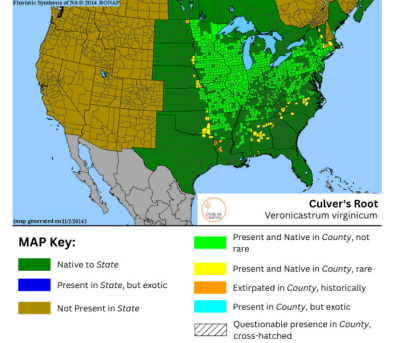
Range: Veronicastrum virginicum is a native perennial wildflower with a broad distribution across eastern and central North America. It thrives in moist to wet meadows, prairies, open woodlands, savannas, and swampy meadows along rivers and ditches.
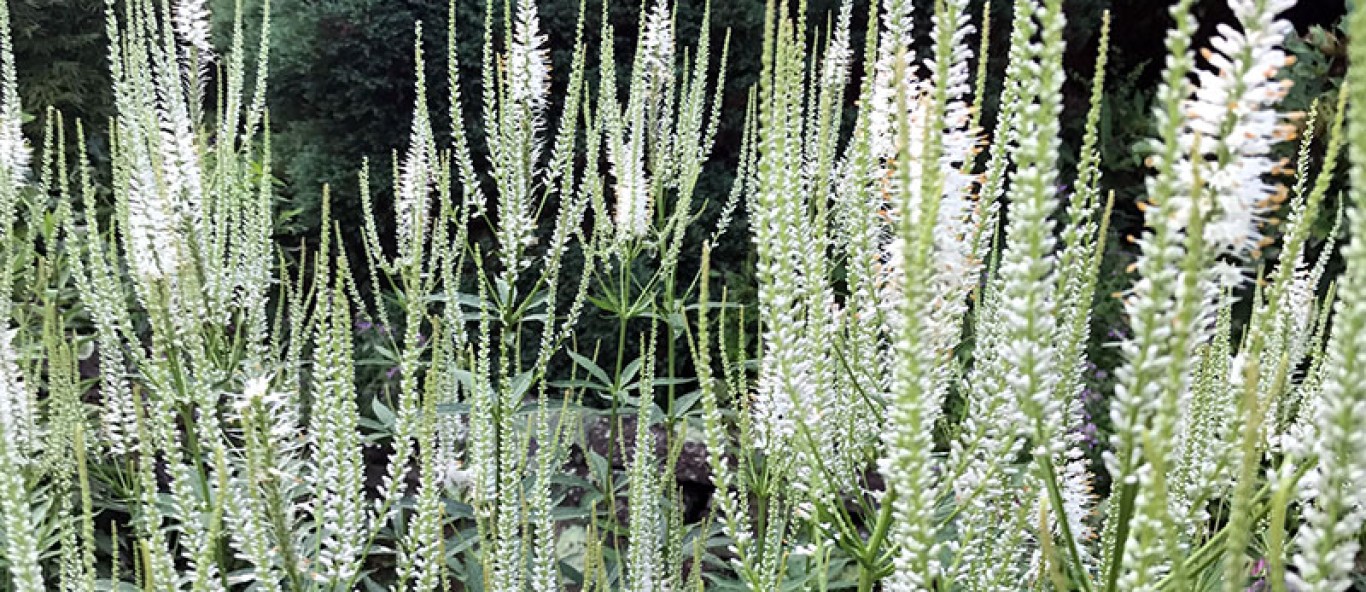
Description & Impact: Culver's root can reach 4 to 6 feet in height, with 3-7 lance-shaped leaves arranged in whorls along the round stem. The leaves are up to 6 inches long, 1–1.5 inches wide, with finely toothed margins. Their topsides are deep green and slightly paler below. It typically blooms from late spring to early summer and displays candelabra-like spikes of tiny white or pale pink tubular flowers. They bloom from the bottom up over several weeks in mid to late summer. This species supports a variety of pollinators, including bees, bumblebees, mason bees, green metallic bees, masked bees, butterflies, moths, and syrphid flies.
Plant Medical History: Several Native American tribes used Culver's root for a variety of ailments. A tea was brewed from the plant for backaches, fever, and typhus. Some used it as a laxative, while others made infusions to treat diarrhea, coughs and chills.
Cultivation & Garden Use: Culver's root grows in USDA zones 3-8 in full sun to partial shade. It prefers moist, well-drained loam or clay that is slightly acidic; try to avoid planting in dry, compacted soils. Its deep taproot makes it drought-tolerant once established, and it can tolerate periodic flooding, making it suitable for rain gardens and low-lying areas. It can be propagated by seed of by dividing mature clusters in late fall or early spring. Its adaptability to various soil and light conditions, along with its support for pollinators, makes it an excellent addition to native plant gardens, prairies, and rain gardens.