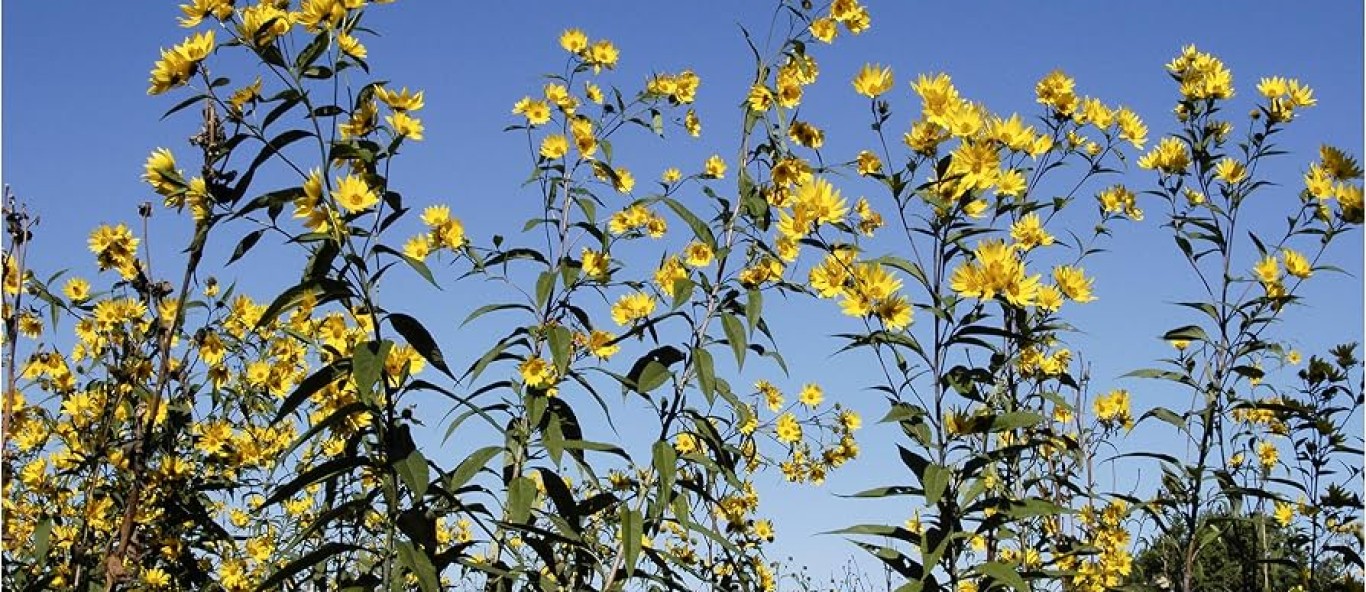
Sawtooth Sunflower
Sawtooth Sunflower (Helianthus grosseserratus)
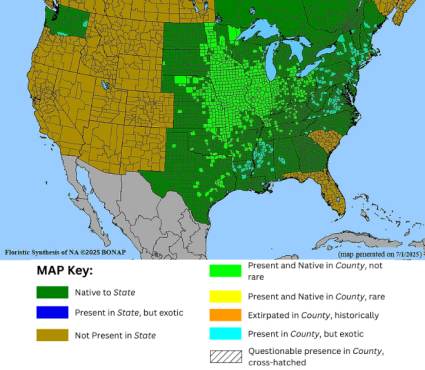
Range: Helianthus grosseserratus is a native perennial sunflower with a broad distribution across Central North America. It is common in moist to mesic black soil prairies, thickets, moist meadows near rivers or lakes, Bur Oak savannas, bases of bluffs, fence rows, and roadsides.
Description & Impact: It can grow 3–12 feet tall, with dense colonies of clumping stems or solitary plants. The central stem is stout, hairless, waxy, and often reddish or reddish-purple. Branching is minimal except for flowering stems along the upper half. Leaves are lanceolate oblong, up to 8 inches long and 2½ inches wide, with coarsely serrated or "toothed" margins. They are medium to dark green above, pale green below, and often slightly recurved or arching. Their flowerheads are 2½–4 inches across, with 10–20 bright yellow ray florets surrounding numerous yellow tubular disk florets. Blooming occurs late summer to fall for 1–2 months. The flowers are useful to many types of pollinators, and the seeds are eaten by birds.
Plant Medical History: Helianthus grosseserratus has a long history of use by Indigenous peoples and early settlers in North America for both food and medicinal purposes. The leaves were used to make a strong tea to help reduce fevers. The leaves were brewed with honey as a tea to loosen phlegm and ease respiratory congestion. The stems were applied in traditional treatments for malaria. The flowers were used in poultices to treat burns.
Cultivation & Garden Use: This plant grows ins USDA zones 3-9, and prefers full sun, moist soil, and fertile loamy soil with high organic content. Powdery mildew may affect the leaves, typically occurring during the fall after the blooming period. Strong winds can cause this plant to blow over in exposed situations; staking and tying the plant up can be helpful. It also requires lots of room because of its large size and tendency to spread easily by rhizomes. The sawtooth sunflower is ideal for prairies, wildflower meadows, pollinator gardens, and erosion-prone areas, as their deep roots can assist in soil stability.