Great Blue Lobelia
Great Blue Lobelia (Lobelia siphilitica)
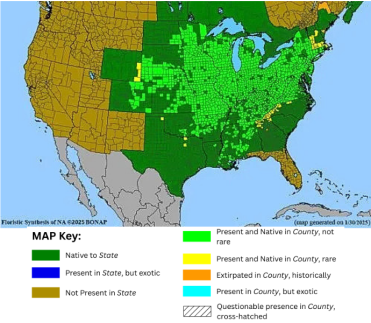
Range: Lobelia siphilitica grows naturally throughout much of eastern and central North America. It thrives in consistently moist to wet soils along streams, in swales, wet meadows, and the margins of ponds and marshes.
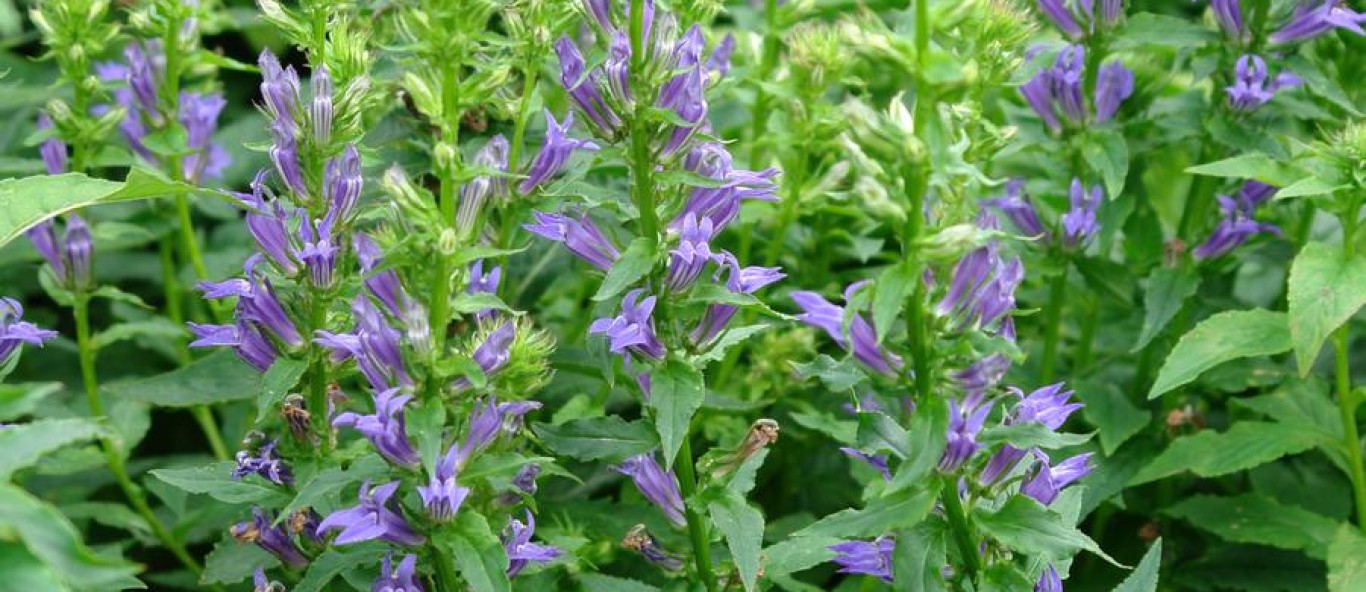
Description & Impact: Great blue lobelia is identified by its distinctive combination of tall, unbranched stems, lance-shaped leaves, and dramatic spikes of brilliant blue tubular flowers. The stems are erect, stout, and unbranched, typically reaching 2 to 3 feet tall. The stems are colored light green and may have a slightly reddish tinge toward the base. The leaves are alternate, simple, and lanceolate to ovate, measuring 2 to 6 inches long and ½ to 2 inches wide. The leaf surface is smooth to slightly rough, with prominent parallel veins, with the color ranging from bright green to blue green. The brilliant blue flowers are tubular, two-lipped blossoms about ¾ to 1 inch long arranged on the upper 6 to 12 inches portion of the stem. They bloom August - September, opening progressively from bottom to top along the stem. Great Blue Lobelia provides exceptional wildlife value, serving as a late-season nectar source for pollinators when many other flowering plants have finished blooming. Ruby-throated Hummingbirds are among their most important pollinators with the long tubular flowers specifically adapted for hummingbird pollination.
Plant Medical History: Some indigenous tribes used an infusion of the roots to treat respiratory complaints and body aches. Others prepared the leaves as a poultice for localized pain and relied on the plant to treat various stomach ailments.
Cultivation & Garden Use: Great blue lobelia grows in USDA zones 4a - 9a. It can grow in full sun to partial shade. In cooler zones, full sun promotes flowering; in hotter zones, morning sun with afternoon shade is ideal. It thrives in moist, organically rich loam or clay. This plant has a high water requirement, so it will excel in areas where water collects. It can self-seed and spread; plan to divide clumps every 3-4 years in early spring if they become overcrowded. Deadheading spent flower stems to encourage additional blooming and prevent unwanted self-seeding. This plant would be a great addition to moist gardens, such as rain gardens, wet meadow plantings, butterfly gardens, native wetland plant gardens, and areas where erosion control is needed.