Rattlesnake Master
Rattlesnake Master (Eryngium yuccifolium)
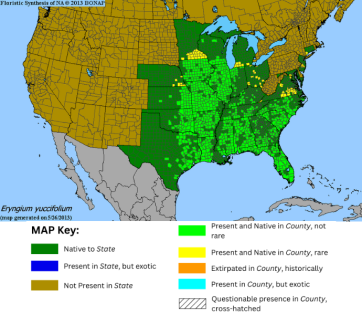
Range: Eryngium yuccifolium is native to grasslands, prairies, and open woodlands in the Central and Eastern United States.
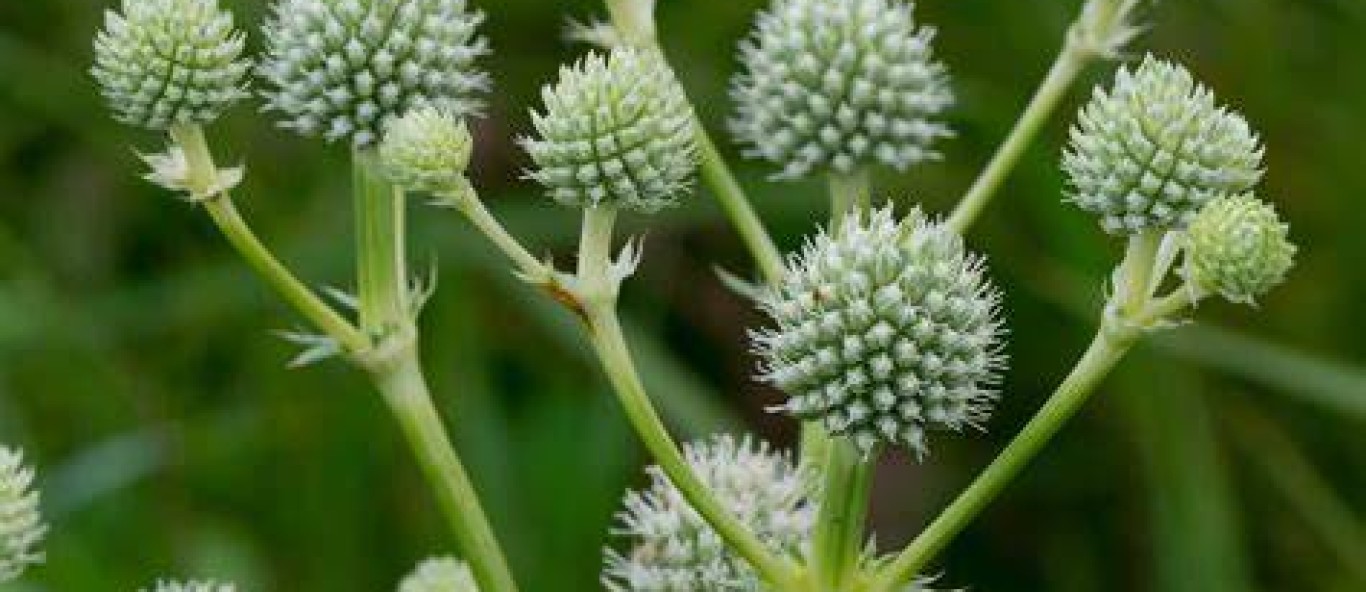
Description & Impact: Rattlesnake master typically grows 3–6 feet tall and is distinguished by its yucca‑like leaves and spherical, spiny flower heads. The leaves are sword‑shaped, bluish‑green, 15–100 cm long, edged with bristles, and strongly resemble yucca plant leaves. The flowers are uniquely dense, spherical clusters that are 1–3 cm wide, greenish‑white to bluish‑white, with spiny bracts. The bloom in mid-summer and attract diverse insects, including bees, butterflies, moths and wasps.
Plant Medical History: Native American tribes and early European settlers used the roots of Eryngium yuccifolium for a variety of ailments. These included treatment for snakebites, coughs, urinary complaints, digestive issues, toothaches, skin sores, and muscle pains. The plant was also used as a general tonic to improve vitality and strength, and women sometimes used it to support reproductive health and relieve menstrual cramps.
Cultivation & Garden Use: Rattlesnake master grows in USDA zones 3-9. This species thrives in full sun and well-drained soils, adapting to sandy, clay, gravelly, or shallow rocky conditions. It is drought-tolerant and performs best in dry to medium moisture conditions, avoiding overly fertile or poorly drained soils. In optimal growing conditions, the plant produces a high seed set (close to 90%) and releases pollen two to three days before the stigmas become receptive, encouraging cross‑pollination. From its basal rosette, it can produce offsets that grow into new plants. This clonal growth helps the plant spread in dense patches, especially in naturalized or prairie settings. Once established, it is low-maintenance and self-sustaining, making it ideal for native gardens, prairies, or rock gardens.