Pale Purple Coneflower
Pale Purple Coneflower (Echinacea pallida)
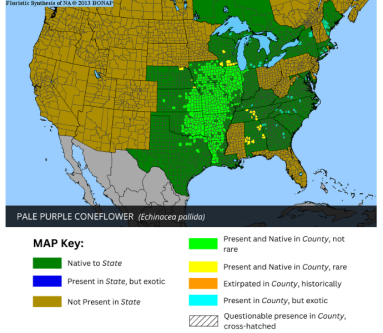
Range: Echinacea pallida is concentrated in the central and eastern United States, with a broad distribution across the Mississippi River Valley and parts of the southeastern U.S. It is often found in well-drained soils of prairies, open woodlands, rocky slopes, and savannas.
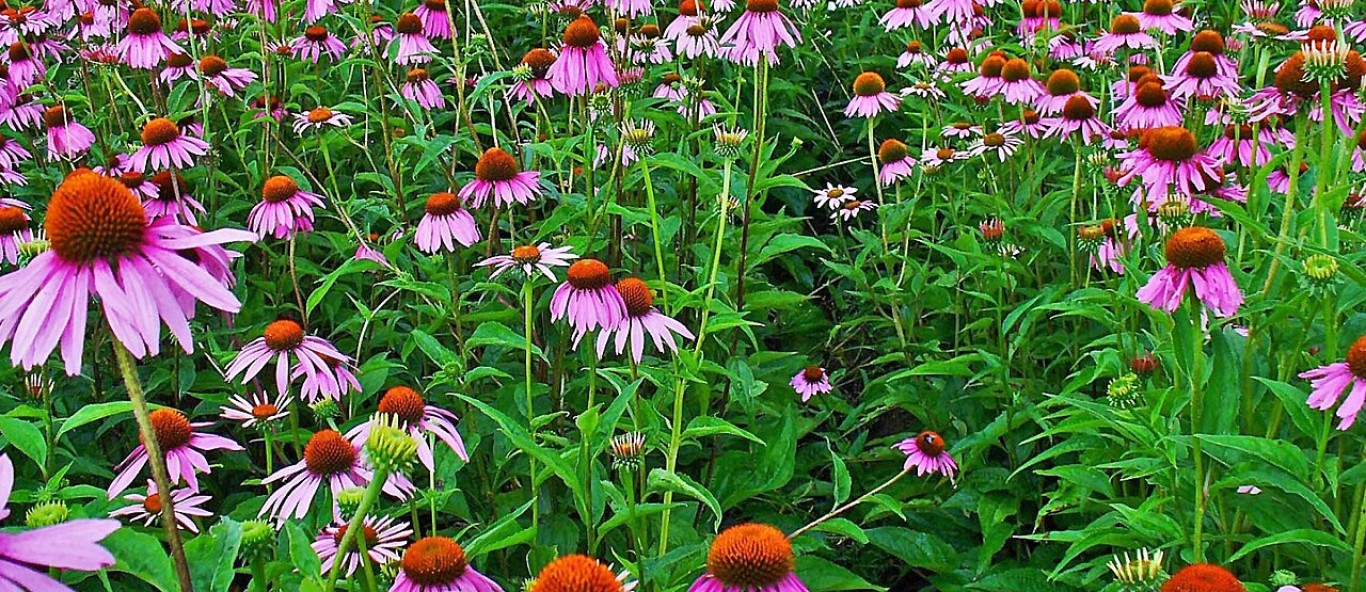
Description & Impact: Pale purple coneflower grows 2 to 4 feet tall with sturdy, upright stems and coarse, dark green foliage. The flowers are large, daisy-like, and typically 3 to 6 inches across, featuring drooping pink to purple ray petals surrounding a spiny, domed central cone that is orange-brown to purplish-brown. The flowers bloom early-summer to mid-fall. The plant has alternate, simple leaves that are dark green and scabrous. Lower leaves are ovate to broadly lanceolate with toothed margins, while upper stem leaves are smaller and narrower. The stems are light green with small purple streaks and scattered white hairs. This species is highly attractive to pollinators, including bees and butterflies, and its seed heads provide food for birds such as goldfinches. Dead stems are hollow and can be left standing to support stem-nesting bee species.
Plant Medical History: Various Indigenous tribes used purple coneflower to treat a range of ailments. It was at times used for coughs and stomach upset. Others used it for wounds, snakebite, and even as a remedy for rabies. Some tribes also used it as a painkiller and to help with rheumatism and arthritis. For toothache, some tribes carved a boiled root into a tooth shape or applied a root poultice to the gums.
Cultivation & Garden Use: Pale purple coneflower grows in USDA zones 3-9, preferring full sun but tolerant of partial shade. The plant thrives in well-draining soil including sandy loam, clay, or loamy soils, and benefits from moderate fertility and organic amendments like compost. Once established, the plant is relatively drought tolerant. It is generally pest-resistant but can be affected by powdery mildew in humid conditions or root rot in poorly drained soils. This plant can self-seed to spread, or you can divide the root mass after a few years of growth. Pale purple coneflower combines ornamental beauty, ecological benefits, and resilience, making it a versatile and iconic perennial for gardens and naturalized landscapes.