Lead Plant
Lead Plant (Amorpha canescens)
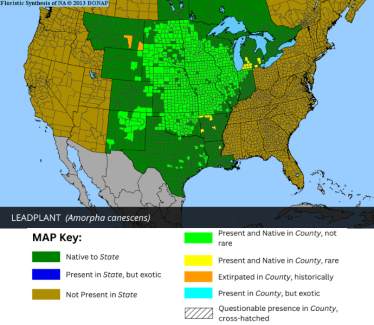
Range: Amorpha canescens is a native North American subshrub in the pea family (Fabaceae) with a wide distribution across the continent. It is well adapted to dry, open habitats and is found in prairies, savannas, open woodlands, dry hillsides, and roadsides.
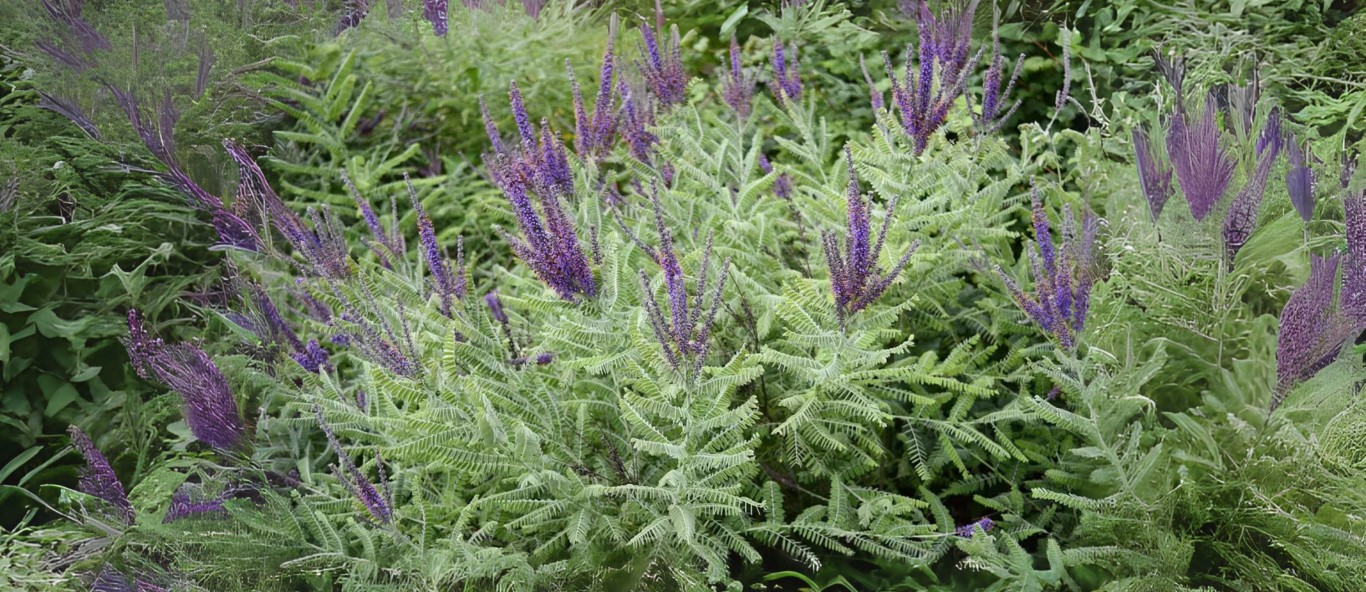
Description & Impact: Lead plant typically grows 1–3 feet tall and 2–2.5 feet wide. Grows from multiple stems; can take on a shrub-like form as it matures. The leaves are odd-pinnately compound, with small leaflets covered in short, dense silver-gray or "lead" colored hairs. Flowers are small and purple with bright orange stamens arranged in long terminal spikes. The plant blooms from late June to mid-September, often attracting pollinators like bees and butterflies. After flowering, the plant produces hairy legume pods containing one smooth, brown seed each. These seeds are dispersed by wind, gravity, or wildlife. It has the ability for nitrogen-fixing via root nodules, benefiting the local soil community's fertility.
Plant Medical History: An infusion of the leaves has been used to kill pinworms or any intestinal worms. The infusion is also used to treat eczema. The dried and powdered leaves are applied as a poultice to cuts and open wounds. A decoction of the root is used to treat stomach pains. A concoction using the twigs has aided in the treatment of neuralgia and rheumatism.
Cultivation & Garden Use: Lead plant grows in USDA zones 2a - 9b, preferers full sun, but can tolerate partial shade. This plant can grow in well-drained loam, sand, or sandy loam, while also tolerating poor, infertile soils. Once established, the plant's water needs are low, and it is considered drought tolerant. Roots can reach 4–5 feet deep and spread up to 1 meter radially, aiding its survival in drought and fire-prone areas. This deep root structure also helps stabilize the soil and prevent erosion. Lead plant is a versatile, hardy native valued for its ornamental value, ecological benefits, and adaptability.