Stiff-leaved Goldenrod
Stiff-leaved Goldenrod (Solidago rigida)
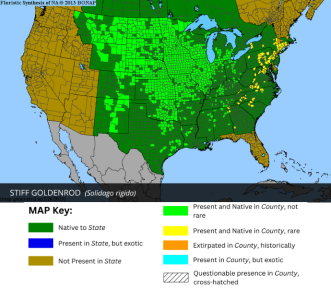
Range: Solidago rigida is a native perennial with a widespread but regionally variable range across eastern and northeastern North America. It occurs primarily in the eastern and northeastern states, usually in open, dry areas such as prairies, savannas, glades, open woods, thickets, and prairie edges.
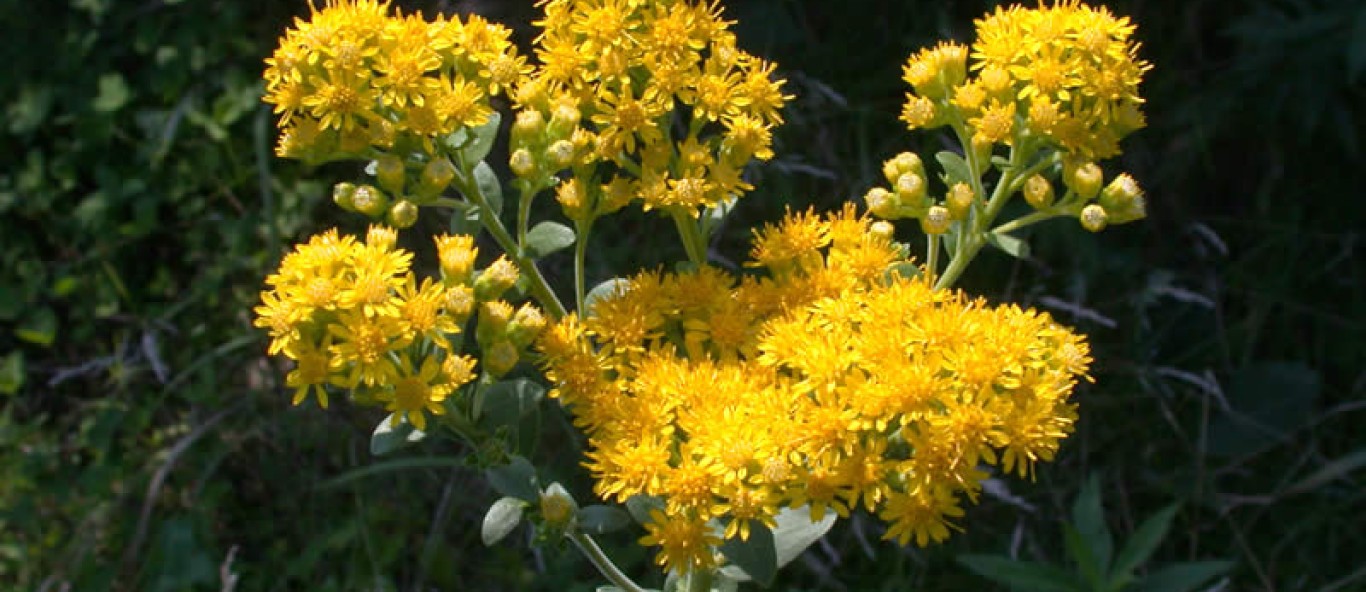
Description & Impact: This plant grows 1–5 feet tall from a deep, woody taproot, with a sturdy, unbranched stem below the flower cluster. The plant has an architectural, almost woody appearance, standing erect rather than arching like many other goldenrods. Stems are thick, rigid, and leathery, ranging from green to reddish-purple. Leaves are thick, leathery, and stiff, with a rubbery texture and alternately arranged. They are 3–6 cm wide and 8–20 cm long, with lower leaves oblong and upper leaves lance-shaped. It produces dense, flat-topped clusters of tiny yellow flowers (about ½ inch diameter) in late summer to early autumn. A keystone late-season nectar source for bees, butterflies (including Monarchs), and other pollinators. The flat stems provide landing platforms for butterflies, and the seed heads feed birds in autumn. It is a larval host for several moth species.
Plant Medical History: Goldenrod species, including S. rigida, have been used by Indigenous peoples and early settlers for respiratory relief, urinary tract support, wound healing and anti-inflammatory and antimicrobial issues. Medical properties were delivered via tea, tincture or sometimes as poultices.
Cultivation & Garden Use: This plant thrives in USDA zones 3 -9, and is adaptable to clay, loam, and sand, preferring well-drained soil. It enjoys full sun, tolerates dry to medium conditions and is drought-tolerant once established. It is easily propagated from seed and will self-seeds readily; be prepared to divide the plantings every 2-3 years to control the spread. Stiff-leaved goldenrod is a great late-season nectar source for bees, butterflies, wasps, and beetles. It can be a great addition to any native wildflower gardens, prairie restorations, meadows, or even roadside planting areas.